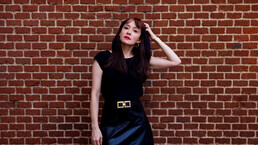
Interview with Marta Sanchez
Spanish pianist and composer Marta Sánchez is one of the leading voices in contemporary jazz. Whether performing with her quintet or as a solo pianist, she combines sophisticated compositions with a remarkable sense of improvisational freedom. In this interview, she talks about her latest album Before the Bloom, the unique challenges of solo performance, and her creative process.
The main difference is that there is much more space for improvisation when I'm playing solo. Even though the compositions are important in the solo piano set as well, the quintet is much more centered on the written music. We all play in service of the composition, and that includes our improvisations.
In the solo performance, it's almost the opposite. The compositions become a starting point—a trampoline—for improvisation. They provide the framework, but I'm much freer to follow wherever the music wants to go in the moment.
It still accompanies me before every concert. I still get nervous before a solo set, but it doesn't limit or paralyze me the way it used to. That shift happened very gradually, not in a particular moment, as I came to understand that fear doesn't have to disappear for me to feel free on stage.
Now I genuinely enjoy the freedom of playing solo. I can immerse myself in the music in a way I couldn't before, and I've learned to let the nerves coexist with the experience instead of allowing them to shape it.
I almost always begin with a clear concept. In fact, I usually don't start writing until I know what the piece is about or what I want to explore. Once I have that starting point, the music develops organically from there. I'm not sure I'd call it improvisation, but I do try to let the music grow naturally, following where each idea leads instead of trying to control every step. That's something I also aspire to when I improvise: staying open enough to let the music reveal itself.
Before the Bloom came from the feeling of being on the verge of something—not knowing exactly what it is, but sensing that something is about to unfold. I feel that both in my musical life and in my life more broadly. There's a sense of anticipation, of change, and of trusting that what's coming will reveal itself in time.
The title definitely shaped the way I approached the music. Rather than trying to resolve everything, I was interested in capturing that state of becoming—that space where things are still unfolding, full of possibility. It's a place that feels especially meaningful to me now.
Absolutely. I think everything you read, experience, observe, or the conversations you have can become a source of inspiration. Music doesn't exist in isolation, so everyday life is constantly feeding the creative process.
For me, though, it's less about the experiences themselves and more about how you process them. Your inner world, your perspective, and the emotions those experiences leave behind are what ultimately shape the music. Two people can go through the exact same experience and write completely different pieces because each of us filters the world in our own way.
For me, every performance or collaboration where there's a real musical connection is ultimately more meaningful than any award or recognition. That feeling of creating something together in the moment is the reason I play music in the first place.
Playing with David Murray has been especially meaningful because it has opened up new aspects of my playing and challenged me to grow in ways I couldn't have anticipated. I also feel that way whenever I'm performing with my own band and everything truly comes together. There have been many collaborations over the years that have shaped me as a musician, and those experiences stay with me far more than any recognition ever could.